NSFW Meaning: What You Need to Know Before Clicking
Ever clicked a link at your desk and instantly regretted it? That’s the exact moment the NSFW meaning becomes crystal clear. NSFW stands for “not safe for work,” a content warning that spread from early internet forums into everyday chat, Reddit threads, and group texts. It’s short, but it carries real weight the difference between a normal Tuesday and an awkward conversation with HR.
This isn’t just internet trivia. Knowing the NSFW meaning protects you from embarrassment, protects your job, and helps you use platforms like Reddit, Discord, and Twitter/X the right way. In this guide, you’ll learn exactly what NSFW covers, where it came from, and how to handle it safely no jargon, no judgment.
Table of Contents
What Does NSFW Mean? Breaking Down the NSFW Meaning
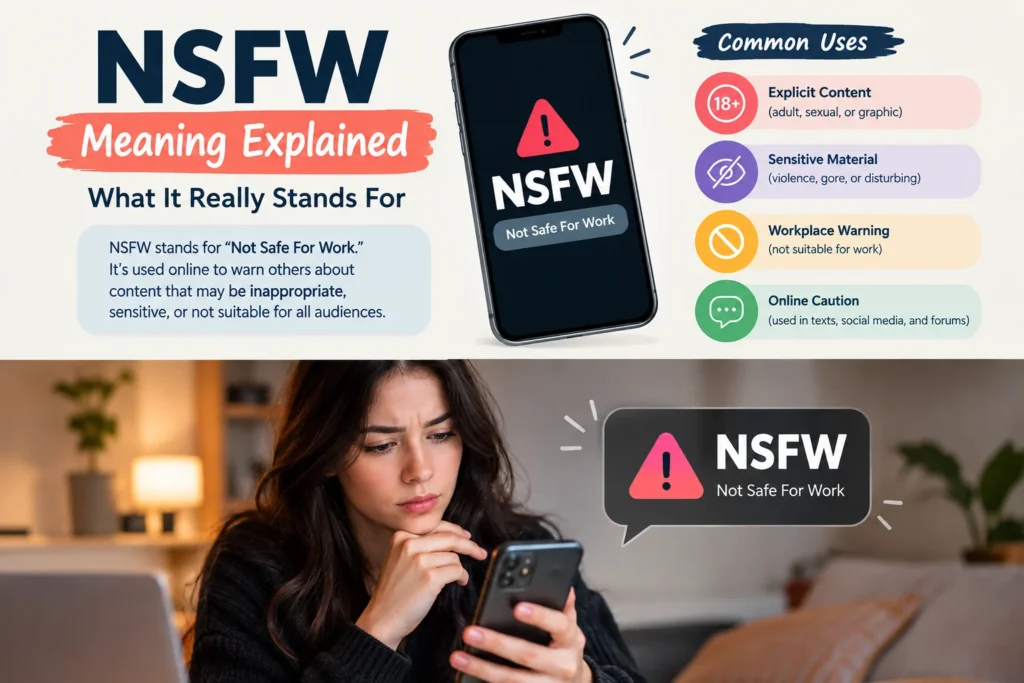
At its core, the NSFW meaning is simple: “not safe for work.” It’s an internet acronym used to warn people before they open explicit or inappropriate content on a work computer, shared device, or public screen. The tag shows up as a hashtag, a label, or plain text before a link.
The opposite tag, SFW (“safe for work”), signals the reverse content anyone can view anywhere. Together, these two acronyms form a quiet agreement among internet users: flag the risky stuff so nobody gets blindsided at their desk, on a group chat, or during a screen share.
What Does the NSFW Meaning Actually Cover?
The NSFW meaning isn’t limited to one type of content. It typically covers nudity, sexually suggestive images, pornographic material, vulgar audio, and graphic violence anything that could trigger workplace policy violations or plain discomfort. Context matters just as much as the content itself.
Some platforms extend the label further, flagging profanity, disturbing imagery, or politically charged material under the same NSFW umbrella. A related tag, NSFL (“not safe for life”), exists for content so graphic or disturbing that even NSFW feels like an understatement.
Why Is It Called NSFW? The Origin Behind the Meaning
The NSFW meaning traces back to early 2000s internet culture, with its earliest documented use on Urban Dictionary around 2003. Forums and message boards needed a fast shorthand to separate everyday posts from adult material, and the acronym stuck because it was short, memorable, and instantly understood.
The term gained mainstream legitimacy in 2015, when Merriam-Webster officially added NSFW to its dictionary alongside other internet-born words like “meme” and “clickbait.” That recognition confirmed what internet users already knew: NSFW had become permanent digital vocabulary, not just forum slang.
How NSFW Disclaimers Work Across Platforms
In practice, the NSFW meaning gets enforced through blur filters, click-through warnings, and age gates. Reddit, Discord, and similar communities let users or moderators flag a post as NSFW, automatically hiding thumbnails until someone chooses to reveal them a small but effective content warning.
Some platforms detect mature content automatically, applying the NSFW label even when the original poster didn’t. This system isn’t perfect, so relying only on official tags is risky; unflagged content still slips through moderation filters, especially on smaller or newer platforms.
What Does NSFW Mean on Discord, Twitter, TikTok, YouTube, and Tinder?
Each platform applies the NSFW meaning slightly differently. Discord lets server owners mark entire channels as NSFW, restricting access to verified adult accounts. Twitter/X uses a media-sensitivity toggle serving the same purpose, while YouTube relies on age restrictions instead of a literal tag.
TikTok and Tinder rarely display the acronym outright but enforce similar community guidelines behind the scenes, removing or restricting explicit material. Understanding these platform-specific quirks helps you interpret warnings correctly instead of assuming every app handles NSFW content identically.
The NSFW Meaning Off the Clock
The literal definition mentions “work,” but the NSFW meaning applies well beyond office hours. Sharing explicit content with family, on public transit, or in mixed-audience group chats carries the same social risk an unexpected, unwanted reveal in front of the wrong audience.
Treat NSFW as a general discretion signal, not strictly a workplace rule. Public Wi-Fi, shared devices, and screen-mirroring setups all create moments where an unflagged NSFW post can cause real embarrassment, regardless of whether you’re technically “at work” when it happens.
How Can You Protect Yourself From NSFW Content?
Protecting yourself starts with simple habits: avoid clicking NSFW-tagged links on work devices, keep personal browsing on personal hardware, and never disable content filters on a shared or company-issued phone. Many workplaces monitor browsing activity, so caution matters more than it seems.
Email and chat platforms increasingly flag suspicious attachments automatically, but don’t rely on that alone. Manually setting spam filters, avoiding unsecured links, and thinking twice before tapping an NSFW warning are small habits that prevent much bigger headaches later.
A VPN Can Help Protect Your Privacy When Viewing NSFW Content
A VPN adds a layer of privacy by masking your IP address and encrypting your connection, which matters if you’re browsing NSFW-tagged content on personal time over public Wi-Fi. It won’t excuse viewing such material at work, but it does reduce exposure to data snooping.
Your Safe Space for the NSFW Meaning in Practice
Ultimately, the NSFW meaning works best as a two-way agreement: tag your own content honestly, and respect the tags others apply. Platforms built around consent-based sharing succeed specifically because users trust the warning system instead of ignoring it.
Treat every NSFW label as a genuine heads-up, not a dare. Whether you’re posting or scrolling, a few seconds of judgment before clicking saves you from consequences that stick around a lot longer than the content itself does.
Conclusion
At the end of the day, the NSFW meaning comes down to one simple habit: think before you click. It’s not a complicated acronym, but it carries real consequences a stray click at the wrong moment can mean an awkward meeting with your boss or worse.
Knowing what NSFW stands for, where it came from, and how different platforms enforce it puts you back in control. Use the tag honestly when you post, respect it when you see it, and keep your personal browsing on personal devices. That’s really all the NSFW meaning asks of anyone.
FAQs
Author

Ethan Carter is a search engine optimization blogger focusing on web slang, text content abbreviations, and social media implications. He creates clean, accurate, and reader-friendly content backed by using thorough research. Its purpose is to help readers understand modern online language with reliable, flexible publications.


3 Comments