
Best Alt Account Meaning Explained For New Users Now
If you’ve ever caught yourself typing “what does an alt account mean” into Google after seeing a stranger mention their “alt” on Reddit or Discord, you’re not alone. The alt account meaning is simpler than it sounds: it’s a secondary profile someone runs alongside their main account, usually to keep parts of their online life separate. Having spent years watching how people actually behave across Instagram, Reddit, and gaming platforms, I’ve noticed the confusion isn’t about the concept, it’s about why someone would bother.
This guide breaks down the real alt account meaning, how an alt differs from a fake or secondary account, and how people use alts across different platforms without getting flagged, banned, or misunderstood. By the end, you’ll know exactly when an alt account makes sense for you and when it’s more trouble than it’s worth.
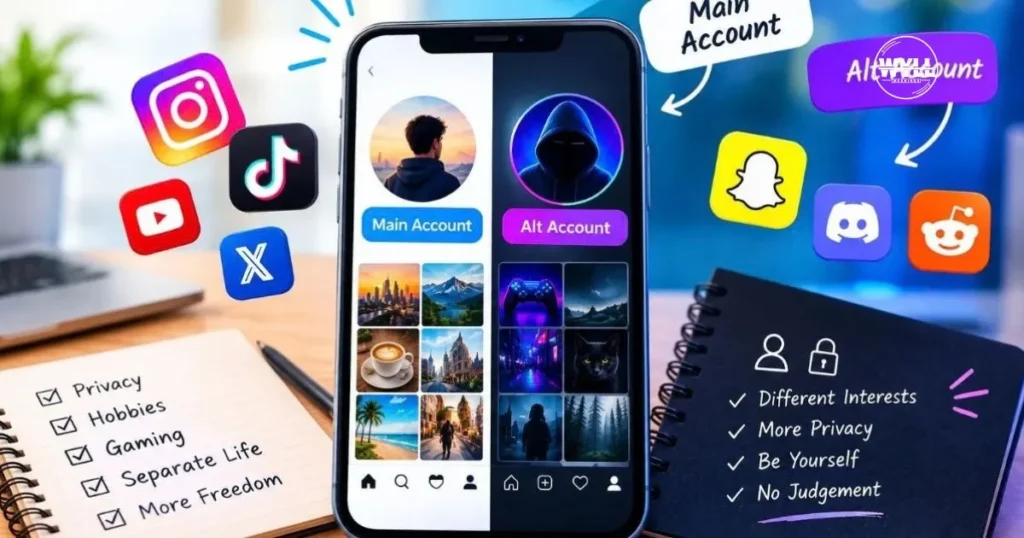
Table of Contents
What Is an Alt Account?
An alt account, short for “alternate account,” is a secondary profile a person creates in addition to their main, established account on a platform. It runs independently with separate followers, separate history, separate reputation while still belonging to the same real person behind the screen.
Unlike a hacked or stolen account, an alt is intentional. People build alt accounts for privacy, content testing, niche communities, or simply to keep one part of their digital identity from bleeding into another. The alt account meaning always circles back to one idea: controlled separation of an online presence.
Alt Account Meaning in Simple Words
In plain terms, an alt account is just a “backup” or “second self” online. Think of it like having a work email and a personal email with the same person, two inboxes, two purposes. That’s the alt account meaning stripped of jargon.
Most people don’t use alts to deceive anyone; they use them to compartmentalize. A private alt lets someone vent, follow niche interests, or test new content without their main audience, employer, or family seeing it. It’s less about secrecy and more about boundaries.
Main Account vs. Alt Account
The main account is a person’s primary, public-facing identity, the one with the established follower count, tagged photos, and real name or brand recognition. The alt exists in its shadow, built for a narrower, often more private purpose.
| Feature | Main Account | Alt Account |
| Visibility | Public, widely followed | Often private or limited |
| Purpose | Primary identity, reputation | Testing, privacy, niche use |
| Followers | Established network | Small, curated, or zero |
| Content | Polished, consistent | Casual, experimental, raw |
| Platform history | Long-standing | Newer, less searchable |
Why Do People Use Alt Accounts?
People create alt accounts because one account rarely fits every part of their life. A teacher might not want students seeing personal opinions; a creator might want to test a new content format without risking their main engagement rate.
Common motivations include privacy from coworkers or family, testing content ideas safely, following sensitive or niche interests anonymously, and separating professional branding from personal posting. The alt account meaning shifts slightly depending on the motive, but the core function separation stays constant.
How Does an Alt Account Work?
Technically, an alt account works exactly like any other account: separate login credentials, separate profile data, and platform algorithms that treat it as an unrelated entity. Most platforms allow multiple accounts per person as long as the terms of service aren’t violated.
The catch is that platforms increasingly use device fingerprinting, IP tracking, and behavioral patterns to detect linked accounts even if you never publicly connect them. So while an alt works independently on the surface, it isn’t always invisible to the platform itself.
Types of Alt Accounts
Not every alt serves the same purpose. Understanding the different types helps clarify which kind of alt account meaning applies to your own situation.
Private Alt Account
A private alt is locked down approval-only followers, no public search visibility, and content meant for a small, trusted circle. It’s the most common type among people wanting distance from their main audience.
People use private alts to post unfiltered thoughts, personal struggles, or casual updates they don’t want appearing on their main feed. It’s less about hiding and more about curating who gets to see the “unedited” version.
Public Alt Account
A public alt is open to anyone but still operates independently from the main profile. Creators often use these to test content styles or reach a different audience segment without merging it into their primary brand.
This type is common among influencers experimenting with new niches for example, a lifestyle creator launching a public alt purely for cooking content to see if it resonates before committing their main channel to it.
Anonymous Alt Account
An anonymous alt hides the user’s real identity entirely, often using a fake name and no identifying photos. These are popular for discussing sensitive topics, venting, or participating in communities where anonymity feels safer.
The anonymous alt account meaning leans heavily toward protection protecting reputation, relationships, or safety rather than testing or marketing purposes seen in public alts.
Niche or Fandom Alt Account
A niche or fandom alt is dedicated entirely to one specific interest: a TV show, a band, a hobby separate from someone’s general personal account. It lets fans go deep into a community without flooding their main followers’ feeds.
These accounts often become surprisingly active hubs, sometimes gaining more niche engagement than the user’s main profile, simply because the audience is hyper-targeted and self-selected.
Gaming Alt Account
A gaming alt account is a secondary in-game profile used for smurfing, testing strategies, or maintaining a fresh account after a ban. In games like League of Legends, Roblox, or Minecraft, alts are extremely common and often tolerated within limits.
The gaming alt account meaning frequently carries a competitive edge skilled players use alts to face lower-ranked opponents, practice new roles, or simply keep a “clean slate” account separate from their ranked history.
Alt Account Meaning on Different Platforms
The alt account meaning doesn’t change dramatically from platform to platform, but how it’s used and how tolerated it is varies quite a bit depending on the community’s rules and culture.
Some platforms actively support multiple accounts through built-in account-switching features, while others treat undisclosed alts as a violation, especially when used to manipulate votes, evade bans, or deceive other users.
What Does Alt Account Mean on Instagram?
On Instagram, an alt is often called a “finsta” (fake Instagram) a private, second account used to share candid content with a small, trusted circle. It’s one of the most culturally normalized forms of alt account usage among younger users.
Instagram officially allows multiple accounts per person through easy account switching, making the alt account meaning here almost mainstream rather than fringe or suspicious behavior.
What Does an Alt Account Mean on TikTok?
On TikTok, alt accounts are commonly used to test content formats, follow niche interests privately, or separate a creator’s public brand from personal browsing. The platform’s algorithm treats each account as a fresh identity with its own “For You” feed.
Because TikTok’s discovery algorithm rewards experimentation, many creators use a TikTok alt purely as a low-stakes testing ground before posting polished content to their main account.
What Does Alt Account Mean on Snapchat?
On Snapchat, an alt is usually a private, close-friends-only account separate from a more public or family-facing profile. Since Snapchat content is ephemeral by design, the alt account meaning here leans toward extra privacy layering rather than content testing.
Users often keep a Snapchat alt specifically to share moments they wouldn’t want appearing in their main Snap Map or public story audience.
What Does Alt Account Mean in Gaming?
In gaming, an alt account almost always ties back to smurfing, practicing, or maintaining access after a suspension. It’s one of the most debated uses of alt accounts because it directly affects matchmaking fairness.
Competitive communities frequently discuss whether gaming alts should be restricted, since a skilled player on a low-rank alt can disrupt the balance of casual or beginner-level matches.
What Does Alt Account Mean on Discord?
On Discord, an alt account is often used to join servers anonymously, avoid a ban on a main account, or separate different friend groups and communities. Discord’s server-based structure makes alts particularly easy to maintain without cross-detection.
Server moderators frequently watch for alt accounts specifically because they’re a common tool for ban evasion, which most Discord communities explicitly prohibit in their rules.
What Does Alt Account Mean on Reddit and Forums?
On Reddit, an alt account meaning is well-documented Reddit even acknowledges that having multiple accounts is allowed and sometimes encouraged for privacy. Redditors use alts to comment in sensitive subreddits without connecting posts back to their main identity.
However, Reddit strictly bans using alts for vote manipulation or evading subreddit bans, both of which can trigger a sitewide suspension even on accounts that seem otherwise unrelated.
Alt Accounts for Brands, Creators, and Influencers
Brands and influencers use alt accounts strategically rather than personally. A creator might run a private alt to test captions, hashtags, or content formats before committing to their main, monetized feed.
This professional use of the alt account centers on risk management protecting a brand’s polished image while still allowing room to experiment, gather raw audience feedback, and trial collaborations without public exposure.
Can You Link an Alt Account to Your Main Account?
Technically, yes many platforms let you switch between linked accounts using the same login credentials, which is convenient but reduces the separation an alt is meant to provide. Linking accounts makes it far easier for others (or the platform itself) to connect the two.
If true separation matters to you, using different emails, devices, or browsers for your alt is far more effective than the platform’s built-in account-switching feature, which often shares data behind the scenes.
Are Alt Accounts Anonymous?
Not automatically. An alt account only becomes anonymous if you deliberately avoid identifying details no shared photos, no matching usernames, no overlapping followers or friends between the two profiles.
Platforms can still detect connections through IP addresses, device fingerprinting, and behavioral similarities, meaning true anonymity requires more effort than simply creating a second account with a different name.
Benefits of Using an Alt Account
Alt accounts offer genuine, practical advantages when used thoughtfully rather than deceptively. They let people compartmentalize their online presence without abandoning any part of it.
Key benefits include protecting privacy from a specific audience (coworkers, family, followers), safely testing content or strategies, engaging with niche communities without cluttering a main feed, and reducing the pressure of maintaining one “perfect” public identity.
Possible Risks and Downsides of Alt Accounts
Despite the benefits, alt accounts carry real risks platform bans, community distrust, and the emotional toll of managing multiple online identities. Many platforms explicitly restrict alt use tied to ban evasion or manipulation.
There’s also a reputational risk: if an alt account is ever traced back to a main identity, especially one used for controversial or hidden behavior, the fallout can be far worse than if the person had simply been upfront from the start.
Alt Account vs. Fake Account: What Is the Difference?
An alt account is owned and operated by a real person as a secondary, legitimate profile, while a fake account is typically designed to impersonate someone else or misrepresent identity entirely for deceptive purposes.
The key distinction in alt account meaning versus fake account meaning comes down to intent: alts separate a real identity into parts, while fakes fabricate an identity that doesn’t genuinely belong to the user at all.
Alt Account vs. Secondary Account: Are They the Same?
Largely, yes “alt account” and “secondary account” are used interchangeably in most everyday contexts, both referring to a second profile run by the same person. The terminology difference is mostly cultural rather than functional.
“Alt” tends to be used more in gaming and internet-culture spaces, while “secondary account” appears more often in formal platform policies and support documentation, but the underlying alt account meaning stays the same either way.
How to Create an Alt Account
Creating an alt account is usually as simple as signing up with a new email address and username, separate from your main profile’s identifying information. Most platforms allow this without any special verification.
For genuine separation, use a different email provider, avoid syncing contacts, skip any phone number tied to your main account, and consider using a different device or browser profile to limit cross-account tracking.
How to Manage Multiple Accounts Safely
Managing an alt account safely means treating it as a genuinely separate identity, not a casual extension of your main one. Mixing behaviors like following the same people or reusing photos quickly erodes the separation you set out to create.
Practical safety steps include using unique login credentials, avoiding cross-posting identical content, never linking payment details shared with your main account, and reviewing each platform’s specific rules around multiple accounts before relying on one.
Common Examples of Alt Accounts
Real-world alt account examples make the concept much easier to picture. A college student might run a private Instagram finsta for close friends only, separate from a polished main profile followed by extended family.
A competitive gamer might keep a low-rank alt to warm up before ranked matches, while a Reddit user might maintain an anonymous alt specifically for posting in mental health or advice subreddits without connecting it to their main username.
Conclusion
At its core, the alt account meaning comes down to one simple idea: people are complicated, and one account rarely captures every side of who they are online. Whether it’s a private finsta, a gaming smurf, or an anonymous Reddit alt, the goal is almost always separation not deception.
Used responsibly, an alt account can genuinely improve your online experience, giving you room to test, explore, and connect without the weight of your main identity attached. Just remember that most platforms draw a hard line between healthy separation and rule-breaking behavior, so knowing where that line sits matters just as much as understanding the alt account meaning itself.
FAQs
Author

Ethan Carter is a search engine optimization blogger focusing on web slang, text content abbreviations, and social media implications. He creates clean, accurate, and reader-friendly content backed by using thorough research. Its purpose is to help readers understand modern online language with reliable, flexible publications.



One Comment