Dump Account Meaning: What It Is and Why Everyone Has One
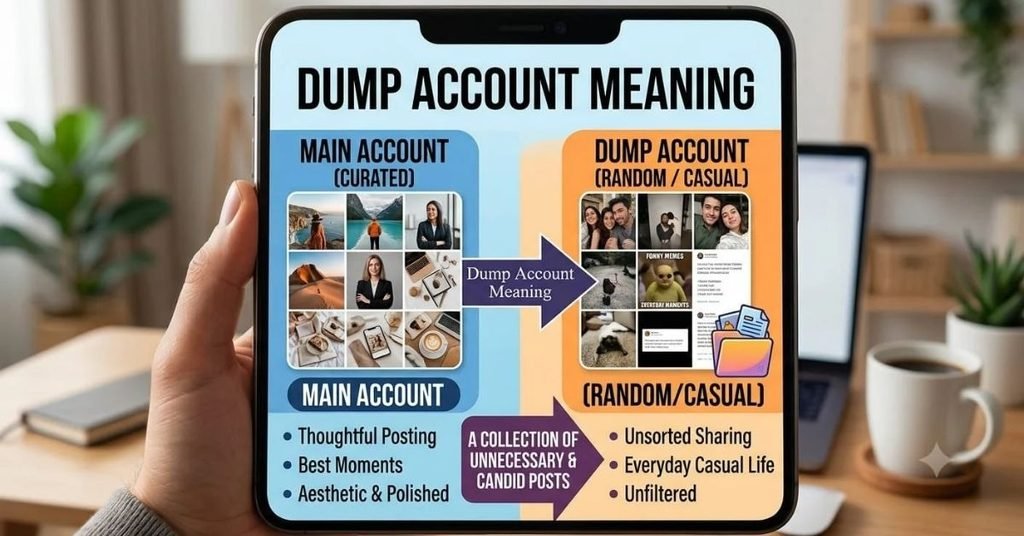
A dump account is a secondary social media profile usually on Instagram where someone posts random, everyday photos and videos without worrying about aesthetics, likes, or a curated feed. The dump account meaning centers on freedom: it’s the opposite of a polished main account, built for authentic sharing instead of performance.
Search interest in this phrase has grown because casual posting itself has grown. People want a low-pressure account meaning fewer filters, less editing, and no obligation to match a color palette. Understanding what a dump account is helps explain a much bigger shift in how Gen Z and Millennials use Instagram and TikTok today.
Table of Contents
What Is the Origin of the Term Dump Account?
The word “dump” borrows from “photo dump,” a term photographers and casual users adopted to describe uploading a batch of unedited camera roll images at once. As curated Instagram feeds became exhausting, the dump account meaning evolved into its own account type rather than a single post.
The trend accelerated during the pandemic, when users were stuck scrolling and grew tired of influencer-style perfection. A secondary account culture dump accounts, finstas, alt accounts emerged as a reaction, giving people permission to post messy, unfiltered, everyday moments without judgment.
Dump Account Meaning on Instagram
On Instagram specifically, dump account meaning usually refers to a public or semi-private secondary profile filled with photo carousels: ten, twenty, even thirty images from the past few weeks dropped in one post. It’s less about a single vacation photo and more about a random, honest life update.
Instagram dump culture also includes frequent Stories, screenshots, memes, and half-edited selfies that would never make a main feed. Many creators keep their main account professional while the dump account meaning, for them, is simply “the real, unbothered version of me.”
Dump Account Meaning on TikTok
TikTok users have adapted the same idea into video form sometimes called a “dump page” or “spam page” where clips, outtakes, and behind-the-scenes moments get posted without much editing. The dump account meaning on TikTok leans more toward community and moots (mutual followers) than Instagram’s photo-heavy version.
TikTok creators often explain the concept directly in videos, teaching followers what a dump account is and why it exists: not to build a personal brand, but to document life casually, without the algorithm-chasing pressure of a main page.
How Does a Dump Account Work?
In practice, a dump account works like any secondary profile: a separate username, separate followers, and a separate posting rhythm. Owners batch-save random photos over days or weeks, then post them together instead of publishing polished single shots on a schedule.
There’s no strict format. Some dump accounts stay public for anyone to follow; others stay private and share the handle only with close friends. Either way, the dump account meaning in daily use is “a low-effort, high-honesty space,” separate from the pressure of a main grid.
What Are the Main Characteristics of a Dump Account?
Dump accounts typically share a few traits: mixed content types (photos, screenshots, memes, videos), no consistent aesthetic, infrequent but bulk posting, and a smaller, more trusted follower base than a main account. Captions are often casual, funny, or intentionally unpolished.
Another defining characteristic is emotional honesty dump accounts often include venting captions, inside jokes, or randomness a main account would never show. This blend of authenticity and low effort is really what the dump account meaning boils down to for most users.
Why Do People Create Dump Accounts?
People create dump accounts to escape the exhausting cycle of curating a “perfect” feed. A main account often carries expectations consistent themes, good lighting, careful captions while a dump account removes all of that, letting users just post what they actually experienced.
There’s also a social layer: dump accounts let close friends see the full, unfiltered version of someone’s week, not just the highlight reel. For many, the real dump account meaning is less about photos and more about reclaiming social media as something personal again.
Dump Accounts Offer Less Posting Pressure
Main accounts can feel like a performance worrying about spacing, likes, and whether a photo “fits” the grid. A dump account strips that away entirely, letting users post ten mediocre photos alongside one great one without a second thought.
This lower-pressure format is a big reason the dump account meaning resonates with younger users especially. It reflects a broader fatigue with algorithm-driven perfectionism and a desire to just document real life without constant self-editing or aesthetic anxiety.
Dump Accounts Let People Share More Authentically
Because the audience is usually smaller and more trusted, dump accounts invite honesty a main feed rarely gets. Blurry photos, awkward angles, and random moments all belong here which is exactly the point behind the modern dump account meaning.
This authenticity mirrors what fantasy and close-friends stories already offered, just packaged as a standalone profile. Users get to be candid instead of curated, sharing the in-between moments that never quite make the cut for a public, polished account.
How Dump Accounts Help With Privacy
Many dump accounts are set to private, giving the owner control over exactly who sees their casual content. This privacy layer is central to the dump account meaning for users who want to share freely without strangers, employers, or distant acquaintances watching.
Private dump accounts function almost like a digital inner circle approved followers only. It offers a middle ground between a fully public main account and keeping everything locked away, letting people share real life with people who actually matter to them.
Dump Accounts and Everyday Memories
Beyond privacy, dump accounts double as a personal archive. Instead of losing random photos in a camera roll, users post them in bulk, creating a scrollable timeline of everyday memories concerts, meals, pets, weird finds without needing a “reason” to post.
This memory-keeping function is a quieter but genuine part of the dump account meaning. It turns Instagram into something closer to a digital scrapbook, prioritizing documentation over presentation, which is exactly what many users say they missed from earlier social media eras.
What Can You Post on a Dump Account?
Almost anything fits: photo carousels, screenshots of funny texts, memes, blurry gym mirror selfies, food pics, pet videos, receipts, ticket stubs, or a random sunset. There’s no theme requirement, which is a core part of what makes the dump account so flexible.
Unlike a main account, there’s no pressure to hit a certain photo quality or relevance. Many users treat it as a running diary posting whatever felt worth remembering that week, however small, messy, or unfiltered it might be.
Dump Account vs Main Account: What Is the Difference?
| Aspect | Main Account | Dump Account |
| Purpose | Curated self-presentation | Casual, everyday documentation |
| Audience | Public, wide-reaching | Smaller, often private |
| Content style | Polished, aesthetic | Random, unfiltered |
| Posting frequency | Scheduled, intentional | Batch, irregular |
| Pressure level | High | Low |
The dump account only makes sense in contrast to a main account one is a highlight reel, the other is real life. Most users keep both, using each account for a different emotional purpose rather than replacing one with the other.
Dump Account vs Photo Dump: Are They the Same?
Not quite. A “photo dump” is a single post a carousel of mixed, unedited images uploaded together, often on a main account. A dump account is an entire secondary profile built around that same casual philosophy, applied to every post rather than one.
So while the dump account meaning grew out of the photo dump trend, the two aren’t interchangeable: one is a posting style, the other is a whole account structure. You can post a photo dump without ever creating a separate dump account.
Dump Account vs Finsta, Rinsta and Alt Account
These terms overlap but aren’t identical. A finsta (“fake Instagram”) emphasizes privacy and close-friend-only venting; a reinstar is simply the real, main account; an alt account is a broader catch-all for any secondary profile, themed or not.
The dump account meaning sits closest to finsta but with less emotional intensity and more casual documentation fewer rants, more random photo batches. All four terms describe secondary-account culture, just with slightly different purposes and tones.
Benefits of Having a Dump Account
The biggest benefit is stress relief: no aesthetic obligations, no algorithm chasing, just posting for the sake of remembering. Users also gain a more honest digital footprint and a space to connect with close friends without a public audience watching.
Beyond emotional benefits, dump accounts also preserve memories that would otherwise vanish into a camera roll. For many, that combination low pressure plus lasting documentation is the most practical, lived-in version of the dump account meaning.
Are Dump Accounts Safe and Private?
Safety depends entirely on the settings a user chooses. A dump account can be locked to “private,” meaning only approved followers see it, or left public, which carries the same visibility risks as any open social media profile screenshots included.
Because dump accounts often contain more personal, off-guard content, most users treat privacy seriously approving followers manually and avoiding identifying details like location tags, which keeps the dump account meaning tied to intimacy rather than public exposure.
Common Misconceptions About Dump Accounts
A common myth is that dump accounts are “sloppy” or low-effort in a negative sense in reality, the casualness is intentional. Another misconception equates dump accounts with spam or bot accounts, which is a different, unrelated concept entirely.
Some also assume dump accounts are only for oversharing negativity. In truth, most reflect ordinary joy meals, friends, pets, small wins which is closer to the real dump account meaning than the assumption that it’s purely a venting space.
Who Uses Dump Accounts?
Dump accounts are most popular with Gen Z and younger Millennials, but the format has spread to creators, students, and even small business owners who want a behind-the-scenes presence separate from their polished main brand account.
Anyone tired of curating a perfect feed is a candidate. The dump account meaning has broadened from a niche Gen Z habit into a mainstream posting style, adopted by people simply looking for a lower-pressure way to stay active on social media.
Real Examples of Dump Account Usage
A college student might run a private dump account shared with 30 close friends, posting weekly photo carousels of dorm life, food, and random moments. A creator might use theirs to post outtakes their main brand account wouldn’t fit.
Other real examples include couples documenting a relationship casually, travelers posting unedited trip photos in bulk, or friend groups running a shared dump account together each version reflecting a slightly different, personal take on the dump account meaning.
How to Create a Good Dump Account
Start by deciding on privacy settings first public or approved-followers-only since that shapes what you’ll feel comfortable posting. Then pick a username, write a simple bio, and resist the urge to plan or curate your first few posts.
A good dump account grows naturally: save random photos as they happen, then post in batches every week or two. The goal isn’t perfection; staying loose and consistent captures the dump account meaning far better than overthinking every upload.
How to Choose a Username for a Dump Account
Usernames often combine something personal a nickname, inside joke, favorite animal, or random word with a suffix like “dump,” “tab,” or “spam.” The goal is memorable but unserious, signaling right away that this isn’t the polished main account.
Many users deliberately avoid their real name to keep the account slightly harder to find, adding a light privacy layer. A playful, low-stakes username actually reinforces the dump account meaning before a single photo is even posted.
Tips for Posting on a Dump Account
Don’t overthink captions short, funny, or blunt ones fit the vibe better than polished ones. Batch photos every one to two weeks instead of daily, and mix content types freely: memes, screenshots, blurry pics, and proper photos can all sit together.
Approve followers thoughtfully if the account is private, and avoid location tags for extra safety. The most successful dump accounts stay consistent but relaxed, which is really the whole point behind the dump account meaning in the first place.
Popular Dump Account Captions and Ideas
Popular captions lean short and casual: “dump,” “recent-ish,” “random but make it a post,” “life lately,” or a string of emojis with no explanation at all. The humor is often in how little effort the caption appears to take.
Content ideas include monthly recaps, “things that made me laugh this week,” pet cameos, food fails, concert clips, or screenshots of funny conversations all everyday material that fits naturally into the loose, unfiltered dump account meaning.
Related Social Media Terms You Should Know
Finsta
A finsta is a private, secondary Instagram account shared with a small circle of close friends, used for more emotionally honest or unfiltered posts than a main profile closely related to, but more personal than, a typical dump account.
Rinsta
Short for “real Instagram,” a rinsta is simply someone’s main, public-facing account the curated counterpart that gives the dump account, finsta, or alt account its contrast and purpose in the first place.
Photo Dump
A photo dump is a single carousel post of mixed, unedited images shared together, often on a main account. It’s the posting style that inspired the dump account meaning, rather than a separate profile itself.
Close Friends
Instagram’s Close Friends feature lets users share Stories with a hand-picked list rather than all followers. It offers similar privacy benefits to a dump account, but only for Stories, not a full separate profile.
Alt Account
An alt account is any secondary profile themed, private, anonymous, or otherwise used alongside a main account. Dump accounts and finstas are both specific types of alt accounts with their own conventions.
Burner Account
A burner account is typically anonymous and short-lived, often used to browse or comment without identity attached. Unlike a dump account, it isn’t meant for ongoing personal documentation or a consistent follower base.
Final Thoughts
At its core, the dump account meaning reflects a simple desire: to post without performing. Whether it’s a private profile shared with a dozen close friends or a public page full of random weekly photos, dump accounts give people permission to be unfiltered again.
That shift matters because social media spent years rewarding perfection over honesty. Dump accounts, finstas, and photo dumps push back against that not by rejecting Instagram or TikTok, but by carving out a smaller, softer corner of it. If you’ve ever hesitated to post something because it didn’t “fit” your feed, a dump account might be exactly the space you’re missing a place where the only requirement is that the moment actually happened.
FAQs
Author

Ethan Carter is a search engine optimization blogger focusing on web slang, text content abbreviations, and social media implications. He creates clean, accurate, and reader-friendly content backed by using thorough research. Its purpose is to help readers understand modern online language with reliable, flexible publications.



One Comment