What Is Sigma? Meaning, Definition, Slang, Origin & Examples
The word “sigma” has become one of the most popular slang terms on the internet. You may have heard teenagers, TikTok users, or social media creators say someone is “sigma,” but what does sigma actually mean?
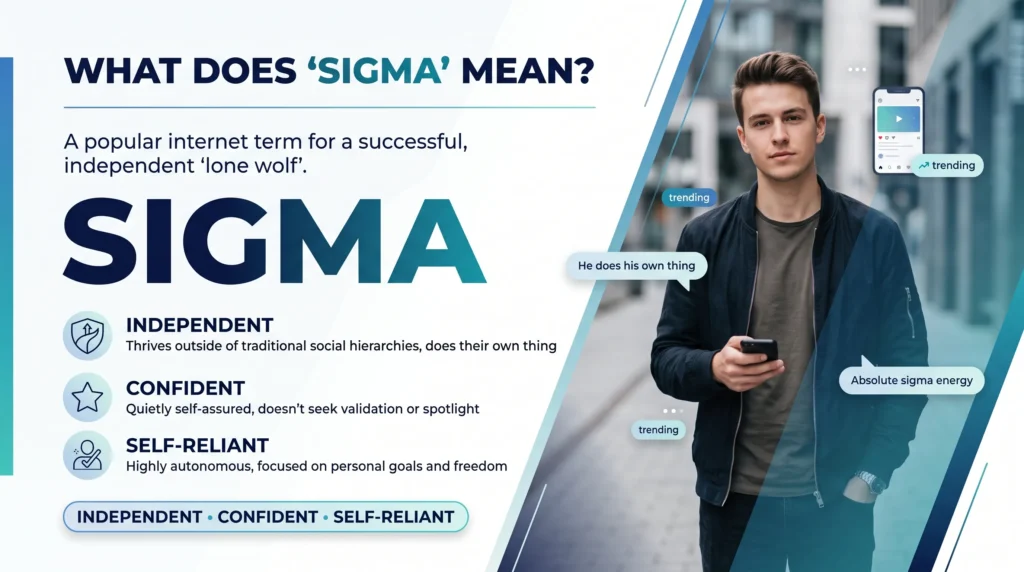
In modern internet slang, sigma usually describes someone who is independent, confident, self-reliant, and comfortable doing things their own way without seeking approval from others. Unlike the traditional idea of an “alpha,” a sigma is often portrayed as someone who does not need to be at the top of a social hierarchy.
The meaning of sigma has changed considerably over time. What started as an internet personality label eventually became a mainstream meme and casual slang expression used by Gen Z and Gen Alpha. Depending on the context, sigma can be a genuine compliment, a humorous description, or simply a joke.
Table of Contents
What Does Sigma Mean?
In slang, sigma refers to a person who is portrayed as confident, independent, and detached from traditional social expectations.
A sigma person is commonly described as someone who:
- Does not depend heavily on social approval
- Is comfortable being alone
- Makes decisions independently
- Remains calm and confident
- Focuses on personal goals
- Does not feel the need to follow the crowd
The modern slang meaning is connected to the internet idea of the “sigma male” or “sigma personality.” This concept presents the sigma as someone who exists outside traditional social rankings rather than trying to dominate them.
Sigma is also the 18th letter of the Greek alphabet, but the slang meaning developed separately through internet culture.
Today, sigma can also simply mean “cool,” “impressive,” or “amazing” when used in memes or casual online conversations.
What Is a Sigma Person?
A “sigma” person is often described as a lone-wolf personality.
Instead of trying to gain popularity, status, or recognition, the sigma archetype is presented as someone who follows their own path. They are usually portrayed as self-sufficient and less concerned about what other people think.
The idea is not necessarily that sigma people dislike everyone. Rather, the stereotype suggests that they are comfortable making their own choices without constantly looking for validation.
Common Characteristics of a Sigma Person
According to the internet stereotype, sigma personalities are often described as:
Independent: They prefer making their own decisions instead of following the crowd.
Calm: They are usually portrayed as quiet and emotionally controlled.
Self-reliant: They depend more on themselves than on social approval.
Private: They may avoid sharing every part of their lives with others.
Goal-oriented: They focus on their own ambitions and personal development.
Confident: Their confidence comes from within rather than from popularity.
These characteristics are part of an online archetype, not a scientific personality classification.
Where Did the Term Sigma Come From?
The modern sigma male concept is generally traced to internet discussions around 2010 and the writer Theodore Beale, better known online as Vox Day.
The concept was presented as part of an informal social or “socio-sexual” hierarchy that used Greek letters such as alpha, beta, and sigma to describe different personality or social roles.
Within that framework, sigma was presented as something similar to an “introverted alpha”—someone viewed as capable and confident but who chooses to operate outside the traditional social hierarchy.
For several years, the idea remained mainly associated with online manosphere communities. Later, social media platforms helped turn the term into a much broader internet meme.
TikTok, YouTube, X, and other platforms played a major role in popularizing the word among younger internet users.
Why Are Kids Saying “Sigma”?
One of the biggest reasons people hear the word sigma today is because of Gen Z and Gen Alpha internet culture.
Young people often use sigma because it is funny, easy to recognize, and connected to popular memes. The word can describe someone acting unusually independent or confident, but it can also be used ironically.
For example, a teenager might call a friend “sigma” after they make an unexpected decision or refuse to follow the group.
The popularity of sigma has also been boosted by:
- TikTok videos
- Meme pages
- Short-form videos
- Sigma edits
- “Sigma grindset” content
- “What the sigma?” memes
- Gaming and YouTube culture
As a result, the original meaning has become less important in many online conversations. Sometimes sigma is simply used because the word itself has become a popular meme.
How Is Sigma Used in Everyday Language?
The meaning of sigma depends heavily on the context.
Someone might use sigma as a compliment when a person makes an independent decision or confidently does something without worrying about other people’s opinions.
For example:
“He ignored the pressure and did what he wanted. That’s sigma.”
In this situation, sigma means something close to independent, confident, or impressive.
Parents and young adults may also hear the word used to praise self-discipline or independence.
Is Sigma Always a Compliment?
No. Sigma can also be used sarcastically.
Internet slang often changes meaning depending on tone. Someone may describe another person as “sigma” because they genuinely admire their confidence, while another person may use the same word to make fun of someone who is trying too hard to appear mysterious or independent.
For example:
“Wow, what a sigma…”
Depending on the tone, this could mean “That was impressive” or it could be a humorous way of mocking the person.
This is one reason sigma can be confusing for people who are unfamiliar with internet slang.
Sigma Meaning With Examples
Here are some common examples of how sigma can appear in conversation:
| Example | Meaning/Tone |
|---|---|
| “Craig is such a sigma; he doesn’t care what everyone thinks.” | Genuine praise |
| “Dave skipped class. What a sigma…” | Sarcastic or ironic |
| “Being sigma doesn’t mean rejecting everyone. It means doing things your own way.” | Independence |
| “What’s sigma doing here?” | Meme or humorous usage |
These examples show that sigma can function both as a personality description and as an internet catchphrase.
The exact meaning is often determined by the tone, situation, and people involved.
What Does Sigma Mean on Social Media?
On social media platforms such as TikTok and X, sigma usually represents some combination of independence, confidence, and being different from the crowd.
However, meme culture has made the word much broader.
Today, people may call almost anything “sigma” if they think it is:
- Cool
- Unexpected
- Confident
- Funny
- Impressive
- Unusual
A stylish outfit, an unexpected move, or a funny moment can all receive a “sigma” label.
This demonstrates how internet slang can evolve from a specific concept into a general-purpose meme expression.
Sigma vs. Alpha vs. Beta
Sigma, alpha, and beta are often discussed together because they come from the same informal internet hierarchy.
The traditional stereotype describes them roughly like this:
Alpha
An alpha is portrayed as:
- Dominant
- Outgoing
- Socially confident
- A leader
- Focused on status or influence
Beta
A beta is traditionally portrayed in the hierarchy as:
- Cooperative
- Supportive
- Less dominant
- More likely to follow established social structures
Sigma
A sigma is portrayed as:
- Independent
- Self-motivated
- Quietly confident
- Less interested in social ranking
- Comfortable operating outside the hierarchy
The biggest difference is that alphas are often described as seeking leadership within the hierarchy, while sigmas are described as operating outside it.
Sigma, Gamma and Omega
Some versions of these online hierarchies also include labels such as gamma and omega.
However, these categories are informal internet concepts rather than established scientific personality types.
The sigma label is generally presented as a form of independence rather than as a lower or higher position in the hierarchy.
This distinction is important because these internet labels often simplify complex human personalities into easy categories.
Advantages and Disadvantages of the Sigma Concept
Like many internet trends, sigma has both supporters and critics.
Advantages
The positive side of the sigma idea is that it can encourage people to think about:
- Independence
- Self-confidence
- Self-discipline
- Personal goals
- Making decisions for themselves
For many people, the word is simply a fun way to describe someone who is confident and comfortable being different.
Disadvantages
Critics argue that sigma culture can sometimes reinforce simplified ideas about:
- Gender
- Social status
- Masculinity
- Dominance
- Social hierarchy
The original sigma concept came from an informal online hierarchy, so it should not be treated as a scientifically proven system for understanding human personalities.
Understanding this difference makes it easier to use the term without taking every online claim about sigma literally.
What Is a Sigma Girl?
Although the term sigma male is more common, people sometimes use sigma girl or sigma female to describe a woman who is considered independent, confident, self-reliant, and comfortable following her own path.
A sigma girl may be portrayed as someone who:
- Does not depend on popularity
- Makes her own decisions
- Values independence
- Is comfortable alone
- Has confidence in herself
Again, “sigma female” is an internet label rather than a recognized psychological personality category.
Is Sigma Good or Bad?
The word sigma is generally neutral or positive, depending on how it is used.
When someone says:
“You’re sigma.”
they may be giving a compliment and saying that the person seems confident or independent.
But sigma can also be used as a joke or sarcastic meme. That’s why the surrounding conversation matters.
The safest way to understand sigma is to look at who is saying it, why they are saying it, and what happened immediately before or after the word was used.
Why Has Sigma Become So Popular?
Sigma became popular because it sits at the intersection of several major internet trends:
Meme culture: The word is short, funny, and easy to turn into jokes.
Short-form videos: TikTok and similar platforms helped spread sigma-related content rapidly.
Sigma edits: Dramatic music, movie scenes, gaming clips, and motivational videos made sigma content visually recognizable.
Teen slang: Younger users adopted the word and turned it into everyday internet language.
Flexible meaning: Sigma can mean independent, cool, impressive, funny, or simply “meme-worthy.”
This flexibility has helped sigma move far beyond its original online context.
Final Thoughts
The meaning of sigma has changed dramatically over the years.
It began as an online concept connected to informal social hierarchies and later became a widespread internet meme used by millions of young people. Today, sigma can describe someone who is independent and confident, but it can also simply mean cool, impressive, funny, or unusual depending on the context.
The most important thing to remember is that sigma is internet slang, not a scientific personality type.
So, the next time you hear someone say “sigma,” pay attention to the context. They might be giving someone a compliment, describing an independent personality, or simply making a joke.
FAQs
Author

Ethan Carter is a search engine optimization blogger focusing on web slang, text content abbreviations, and social media implications. He creates clean, accurate, and reader-friendly content backed by using thorough research. Its purpose is to help readers understand modern online language with reliable, flexible publications.