Órale Meaning: What Does Órale Mean in Spanish Slang?
You’ve heard it in a Breaking Bad scene, in a George Lopez punchline, or from a coworker who just can’t believe what you told them “¡Órale!” The tricky part is that nobody ever hands you a clean definition, because órale doesn’t have one. It shifts with tone, context, and the person saying it, which is exactly why so many English speakers search for the órale meaning and walk away more confused than when they started.
This guide breaks down órale, híjole, and ándale three of the most common Mexican Spanish interjections you’ll run into in everyday conversation, TV, music, and social media. You’ll get plain-English translations, the emotional context behind each word, real conversational examples, a side-by-side comparison, and the mistakes non-native speakers make most often. By the end, you’ll know exactly which word fits which moment.
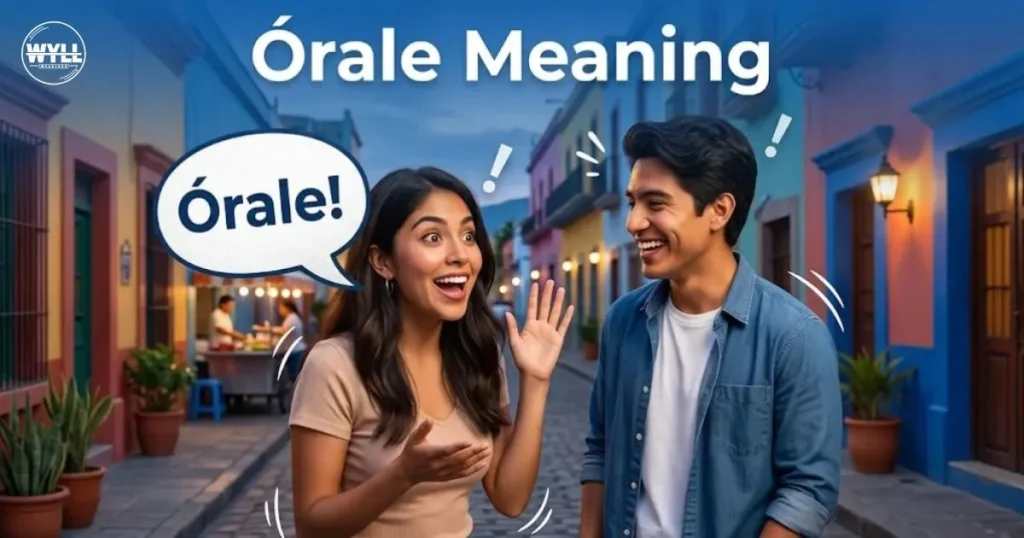
Table of Contents
What Does “Órale” Mean in Mexican Spanish?
Órale is a Mexican Spanish interjection that changes meaning based on tone, and that flexibility is exactly what makes it so widely used. Said with excitement, it works like “right on” or “hell yeah.” Said flatly, it can simply mean “okay” or “got it,” confirming you understood something without any extra emotion attached.
The word traces back to “ahora” (now), shortened to “ora” with an added “-le” suffix the same pattern you see in “ándale” and “épale.” Linguists and Mexican-Spanish dictionaries (including the Diccionario Breve de Mexicanismos) note it functions as an exhortation, a way to urge someone into action, alongside its use as a greeting, an affirmation, or a mild expression of distress or surprise.
What Does “Híjole” Mean in Mexican Spanish?
Híjole is an exclamation of surprise, shock, or mild dismay, closer in feeling to “whoa,” “jeez,” or “oh man” than to any single fixed English word. Mexicans use it when something catches them off guard good news, bad news, an impressive feat, or an awkward moment which makes it one of the most emotionally flexible interjections in everyday Mexican Spanish conversation.
Interestingly, híjole is a euphemism. Linguists trace it back to “hijo de la [chingada]” a vulgar phrase softened over generations into “¡hijo-e-la!” and eventually “¡híjole!” This history explains why it can carry a little edge of frustration (“híjole, se me volvió a hacer tarde” man, I’m late again) alongside pure amazement (“híjole, qué rico está esto” wow, this is delicious).
What Does “Ándale” Mean in Mexican Spanish?
Ándale is a command form used to mean “come on,” “hurry up,” or “go ahead,” and it’s one of the most recognizable Mexican Spanish words in American pop culture thanks to decades of film and TV exposure. At its core, it’s the imperative of “andar” (to move/walk) plus that same “-le” suffix, so it literally pushes someone toward action.
Beyond urging speed, ándale also works as agreement or confirmation, similar to “that’s right” or “exactly.” If a friend explains something and you respond “¡ándale!”, you’re not telling them to hurry, you’re saying “yes, that’s it, you got it.” Context and tone decide which job the word is doing at the moment.
Híjole vs Ándale vs Órale: Key Differences (With Comparison Table)
Once you line these three interjections up side by side, the differences in Mexican Spanish become much clearer, and picking the right word gets a lot less intimidating. Each one covers different emotional ground órale leans toward affirmation and hype, híjole leans toward surprise, and ándale leans toward urging or confirming action.
The table below breaks down core meaning, tone, and the closest English equivalents so you can reference it quickly instead of guessing mid-conversation. Keep in mind regional and personal variation still applies Mexican slang is shaped as much by tone of voice as by the word itself.
| Word | Core Meaning | Typical Tone | Closest English Equivalent |
| Órale | Affirmation, agreement, hype, mild distress | Enthusiastic or neutral | “Right on,” “okay,” “whoa” |
| Híjole | Surprise, shock, dismay | Amazed or exasperated | “Whoa,” “jeez,” “oh man” |
| Ándale | Urging action or confirming agreement | Encouraging or affirming | “Come on,” “hurry up,” “exactly” |
When and How to Use “Órale” in Conversations
Órale works best as a reaction word something you say in response to news, an action, or a statement rather than something you plan out ahead of time. If a friend shows you a new car, “¡órale!” reads as genuine admiration. If someone tells you the plan, a flat “órale” just confirms you’re on board.
Tone is everything here, so pay attention to pitch and pacing before you copy it. A sharp, clipped “órale” can signal irritation or a warning, while a drawn-out, upbeat “óoórale” reads as excitement. Listening to native speakers in context not just reading a dictionary entry is the fastest way to get this right.
When and How to Use “Híjole” in Conversations
Híjole shines in moments of genuine surprise, whether that surprise is good, bad, or simply unexpected. It’s a safe, family-friendly way to react strongly without reaching for anything vulgar, which is part of why it’s stayed so popular across generations of Mexican Spanish speakers.
Use it the way you’d use “whoa” or “geez” in English: reacting to a shockingly high price, a dramatic story, a close call, or bad timing. It doesn’t ask anything of the listener and doesn’t push anyone to act it simply expresses your own emotional reaction to what just happened.
When and How to Use “Ándale” in Conversations
Ándale fits situations where you want someone to move faster or take action, making it a natural fit for parents, coaches, or friends trying to get a group moving. “¡Ándale, vámonos!” (“Come on, let’s go!”) is a classic, everyday example you’ll hear constantly in households and group outings.
It also works as an agreement marker once a conversation has settled something. After you explain your weekend plans, a friend replying “ándale pues” essentially means “sounds good, that’s settled.” Recognizing this second, calmer use keeps you from assuming every ándale is a command to hurry.
Examples of Híjole, Ándale, and Órale in Real Conversations
Seeing these words inside full exchanges makes the differences click faster than any definition alone. Real conversations reveal how tone, timing, and relationship between speakers shape which interjection fits something a plain glossary entry can’t fully capture on its own.
- “¿Viste el partido anoche?” / “¡Órale, no puedo creer que ganamos!” (Did you see the game last night? / Right on, I can’t believe we won!)
- “Se me olvidó la tarea otra vez.” / “¡Híjole, ya van tres veces esta semana!” (I forgot my homework again. / Whoa, that’s three times this week!)
- “Vamos a llegar tarde.” / “¡Ándale, apúrate!” (We’re going to be late. / Come on, hurry up!)
Common Mistakes Non-Native Speakers Make With These Words
The most frequent mistake is treating these interjections as if they only carry one fixed meaning, when tone actually does most of the work. Saying “órale” in a flat, deadpan voice when you mean to sound excited can come across as sarcastic or dismissive instead of enthusiastic the opposite of what you intended.
Another common slip is overusing “híjole” for situations that call for a stronger or more specific reaction, or using “ándale” as a command with people you don’t know well, which can sound abrupt in a formal setting. Watching how native speakers pair these words with facial expressions and pacing not just memorizing translations closes this gap fastest.
Conclusion
Learning órale, híjole, and ándale isn’t really about memorizing three definitions it’s about tuning your ear to tone, because that’s what actually carries the meaning in Mexican Spanish. Start by noticing how native speakers use them in movies, music, or conversations with friends, then try dropping them into your own low-stakes exchanges. The more you hear them in context, the more natural picking the right word and the right órale meaning for the moment will feel.
FAQs
Author

Ethan Carter is a search engine optimization blogger focusing on web slang, text content abbreviations, and social media implications. He creates clean, accurate, and reader-friendly content backed by using thorough research. Its purpose is to help readers understand modern online language with reliable, flexible publications.